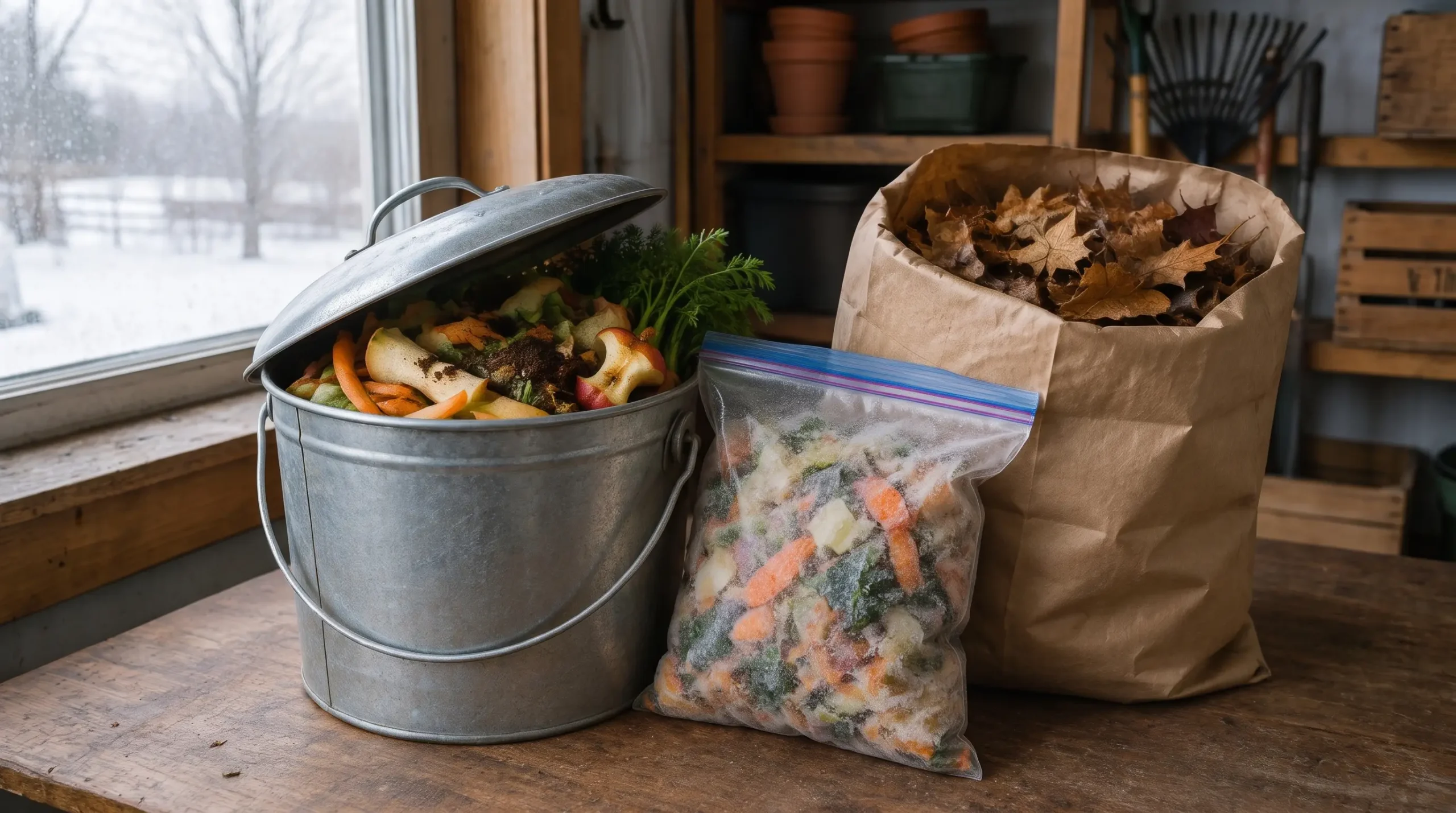
Winter composting works, just slower. Build the pile at least 3 feet wide, deep, and tall, mix about 2 to 3 scoops of browns per scoop of kitchen scraps, cap it with straw or leaves, and stop turning once temperatures stay below freezing. In Zones 3 to 5 the pile will probably freeze solid. That pauses it. It does not ruin it.
At a Glance: Winter Composting
- Pile size: At least 3 x 3 x 3 feet (about 1 cubic yard). Smaller piles freeze first.
- Mix: About 2 to 3 scoops of browns per scoop of scraps, chopped small.
- Turning: Stop during long freezes. Turn once on a thaw.
- Scraps: Bury them in the center, or freeze them and add them in spring.
- Ready by: Early spring at the soonest for a pile built in fall.
Does Compost Break Down in Freezing Weather?
Yes, but slowly. Cold-tolerant microbes keep working inside the pile until the core freezes, and decomposition restarts on its own when the pile thaws.
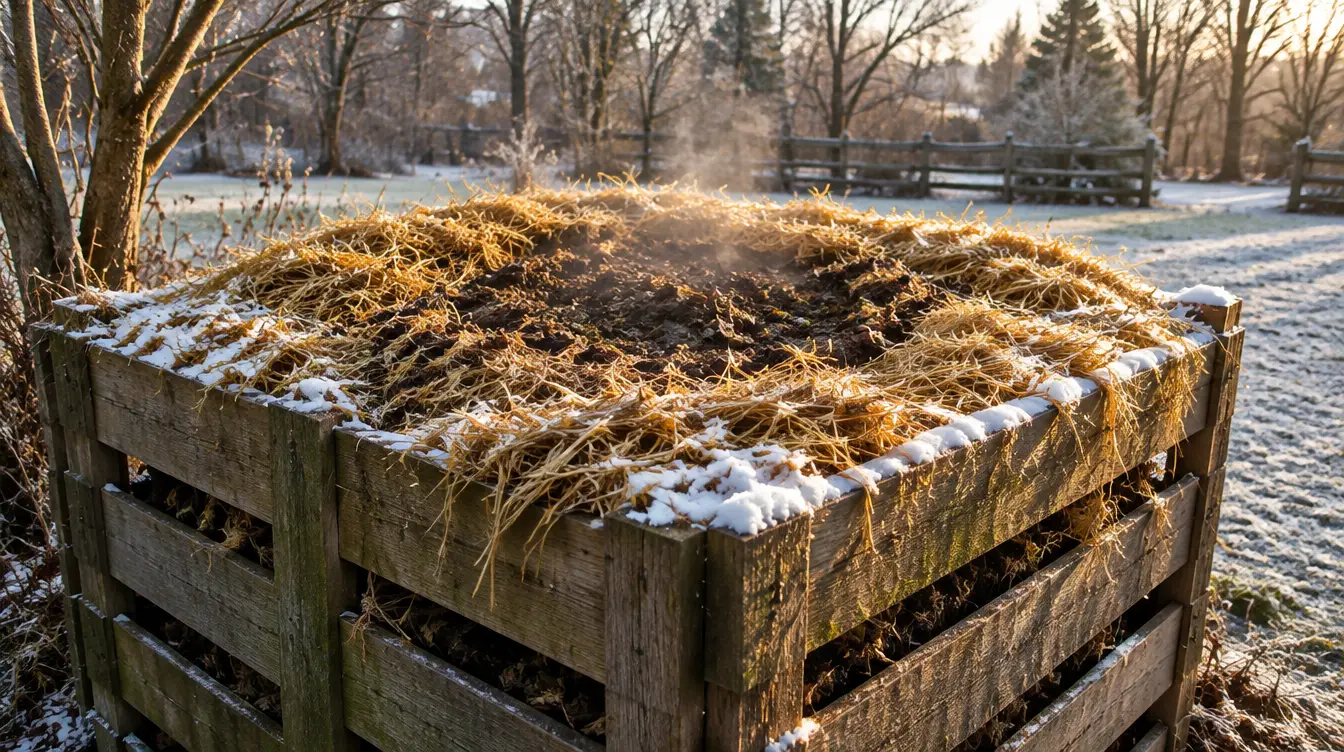
According to University of Illinois Extension, the fast, heat-loving bacteria work best between 113 and 167°F. Below about 68°F, slower cold-loving bacteria take over, so winter composting shifts into a lower gear instead of stopping.
A pile that freezes solid is paused, not dead. Cold-zone gardeners report piles picking back up after the spring thaw.
Video: Gardens That Matter on how cold changes what happens inside a pile.
What Should You Expect in Your Zone?
The colder your zone, the more winter composting becomes a storage job instead of a breakdown job.
- Zones 3 to 5: Expect the pile to freeze solid for weeks. Aim for a big, well-mixed pile that restarts fast in spring.
- Zones 6 and 7: Freeze and thaw cycles are common. A large pile keeps working during mild spells.
- Zones 8 to 10: Winter composting here slows but rarely freezes. Cover the pile so winter rain does not make it soggy.
How Big Should a Winter Compost Pile Be?
Aim for at least 3 feet wide, deep, and tall, which is about 1 cubic yard. Piles smaller than that tend to freeze solid first.
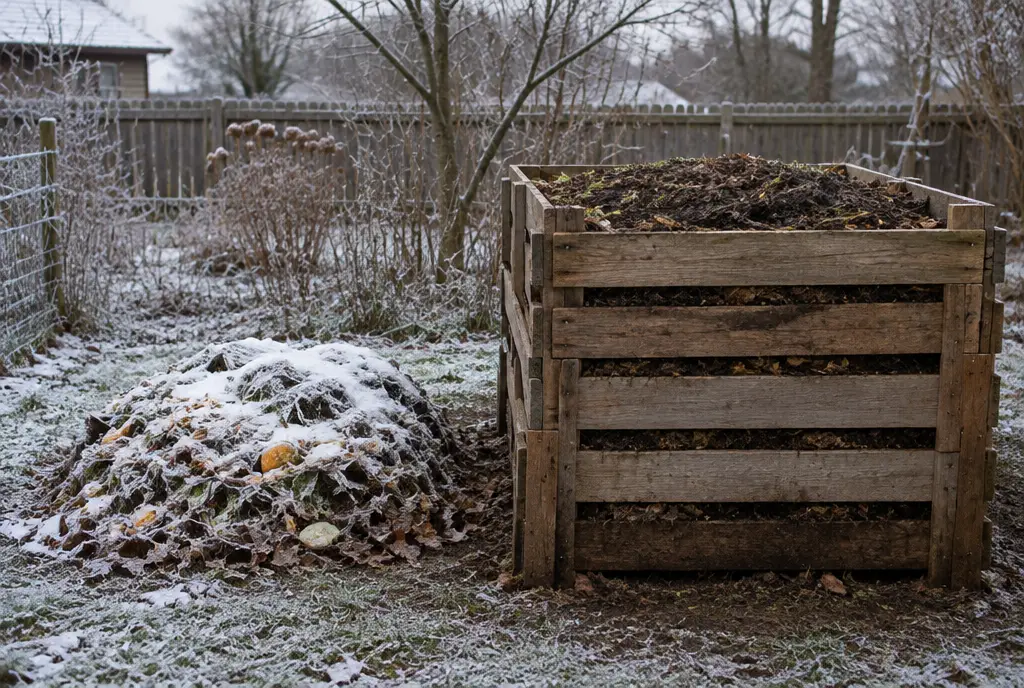
The outer layers of a big pile insulate its core, and 4 to 5 feet per side holds heat even better. Combine small piles in late fall, and stockpile bagged leaves as winter browns.
Pile size is the fix most people miss. One Zone 5b gardener on the Permies composting forum wrote, “I have struggled with frozen piles that don’t really do much when it gets cold.” He traced it to several small piles instead of one large heap.
How Do You Insulate a Compost Pile for Winter?
Pick a sunny spot out of the wind, then cap the pile with a thick layer of straw, dry leaves, wood chips, or finished compost.
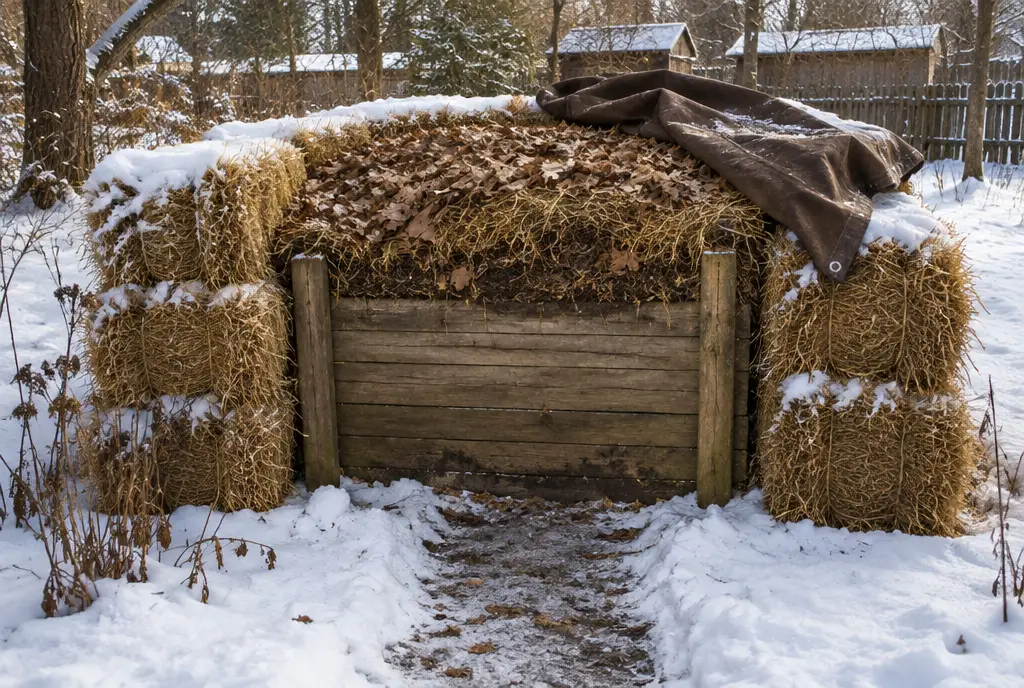
Block cold wind with a fence, a hedge, or straw bales stacked around three sides. Keep a path shoveled to the pile, because a pile you cannot reach stops getting fed.
Do not seal the pile in plastic. Microbes need air. A tarp over the top sheds snow, but an airtight wrap turns the pile sour and slimy.
Tumblers lose heat on every side, so in Zones 3 to 6, empty a full tumbler onto the main pile before deep cold arrives.
Supplies: a long-stem compost thermometer (20 inch stem reaches the core), a spading fork for breaking up frozen clumps, bagged leaves or a straw bale for browns, and a lidded pail for kitchen scraps.
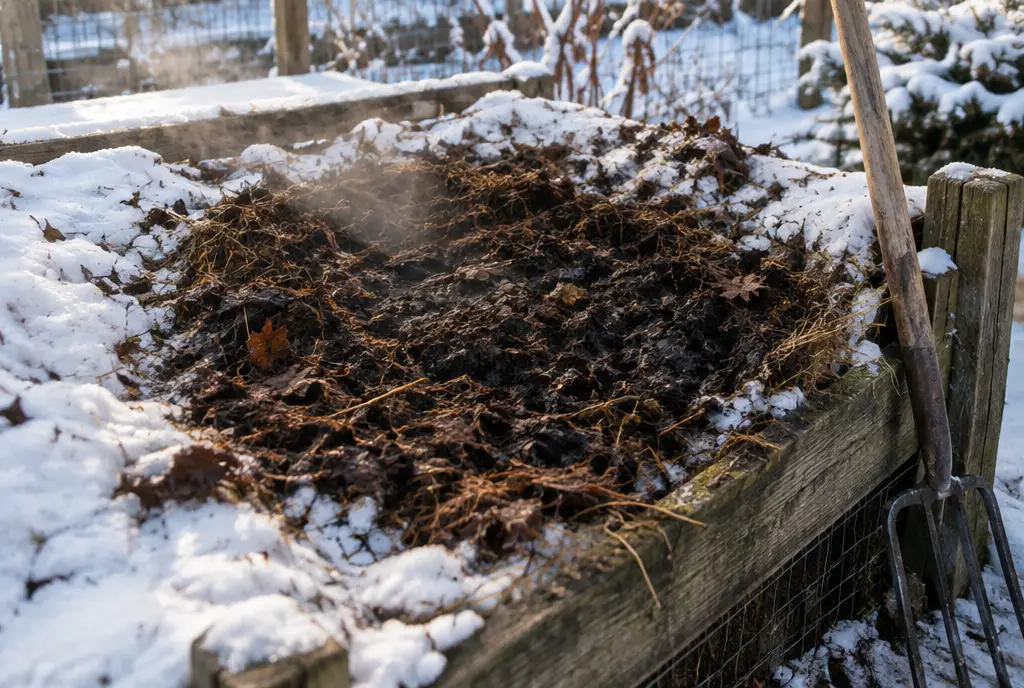
No thermometer? Watch the snow. An active pile melts the snow on top. If snow builds up, the core has frozen.
Should You Turn Compost in Winter?
Turn it much less than in summer. Every turn releases heat, so stop turning during long freezes and give the pile one turn on a thaw.
The advice splits here. University of Illinois Extension advises turning less, or not at all, during sustained freezes. Many cold-zone gardeners still turn on warm days to mix frozen layers. Your pile’s temperature decides who is right:
| If your pile | Do this | Why |
|---|---|---|
| Has daytime highs below 32°F for a week or more | Leave it alone | Turning bleeds off heat and breaks the insulating crust. |
| Hits a thaw with highs above 40°F | Turn it once | Mixes frozen outer layers into the warmer core. |
| Reads above 100°F at the core | Turn about once a month | It has heat to spare, but frequent turning still cools it. |
Video: Gardening In Canada on frozen piles in Zones 3 and 4.
What Mix of Greens and Browns Works in Winter?
Start with about 2 to 3 scoops of browns, such as dry leaves or shredded cardboard, for every scoop of greens, such as vegetable scraps or coffee grounds.
Guides measure ratios by weight or by bucket, so treat any ratio as a starting point. A sour, soggy pile needs more browns. A dry pile that never warms needs more greens.
For winter composting, chop scraps small and skip liquids, which pull heat out of the pile. Fresh chicken, horse, or rabbit manure adds heat. Keep wood ash to a light dusting, because it raises pH.
How Do You Handle Kitchen Scraps When the Pile Is Frozen?
You can keep adding scraps to a frozen pile or store them until spring. Your zone and your rodent risk decide which works better.
- Keep adding: Bury scraps in the center under browns. Skip meat, dairy, and oily food, which draw rats to a slow pile.
- Freeze and wait: Bag scraps in the freezer or a lidded garage bin, then mix them in at the thaw.
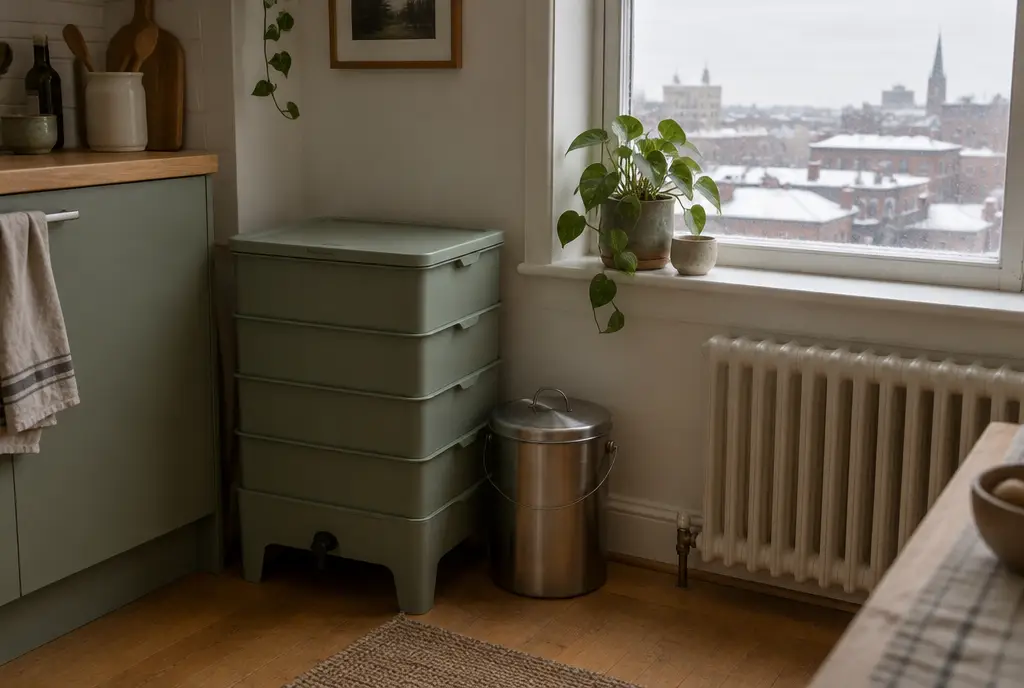
- Go indoors: A worm bin handles scraps all winter. The EPA says worms do best at 59 to 77°F. A bokashi bucket is another indoor option.
When Will Winter Compost Be Ready to Use?
A pile built in fall is rarely finished before early spring, and in Zones 3 to 5 it often needs until early summer.
Plan backward from your last spring frost date. About 6 to 8 weeks before it, stop adding scraps to the pile you plan to use and start a second pile. Finished compost is dark, crumbly, and smells like soil.
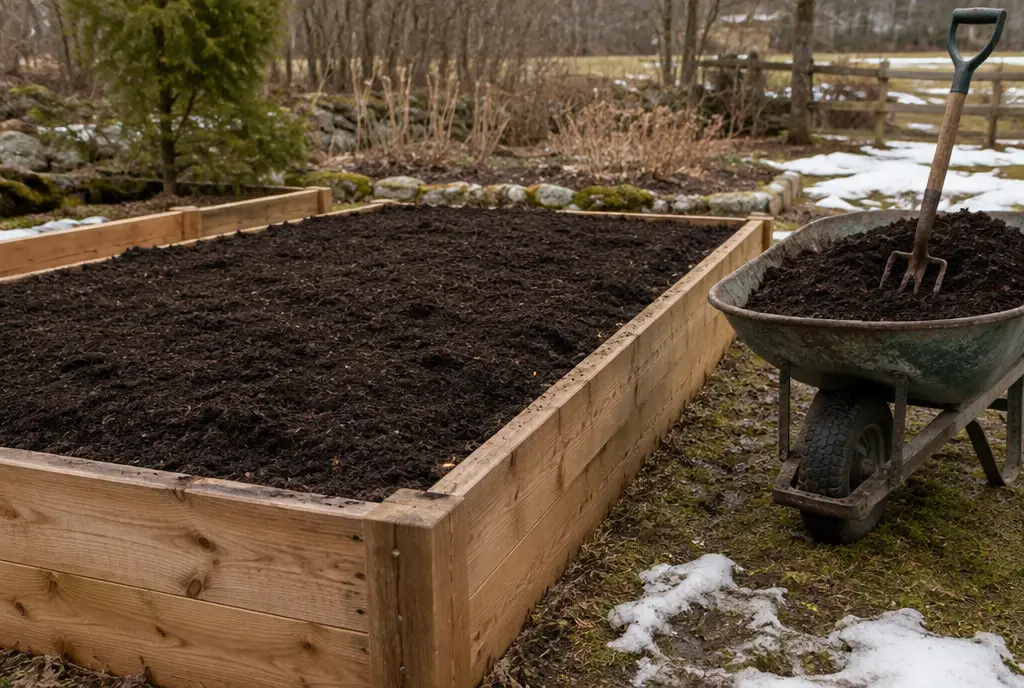
Not finished at planting time? Spread it on top of your beds as mulch instead of digging it in, and soil life will finish the job. Our guide to autumn soil preparation shows how to ready beds for that top layer.
Where you land on this depends on how long your pile stays frozen and whether rodents can reach it.
Frequently Asked Questions
Can you start a compost pile in winter?
Yes. Build it as large as your materials allow, with a thick base of browns such as stored fall leaves or shredded cardboard. In Zones 3 to 5 the new pile will mostly sit frozen until spring, but it will be assembled and ready to heat up as soon as temperatures rise.
Does a frozen compost pile die?
No. Freezing pauses the microbes that break down scraps, but it does not wipe them out. Once the pile thaws, decomposition restarts on its own. Turning it once after the thaw and adding a fresh layer of greens helps a slow pile recover heat faster in early spring.
Can I use a compost tumbler in winter?
You can, but expect it to freeze before an open pile does. A tumbler’s small drum loses heat on every side. In Zones 3 to 6, many gardeners empty it onto the main pile in late fall and use it again in spring. In Zones 8 to 10 it usually keeps working.
Will a winter compost pile attract rats?
It can, because a slow pile leaves food exposed for weeks. Bury scraps in the center under a thick layer of browns, skip meat, dairy, and oily food, and use a bin with a solid lid and a wire mesh base if rodents are common. Otherwise, freeze scraps until spring.
Ready to Keep Your Pile Going This Winter?
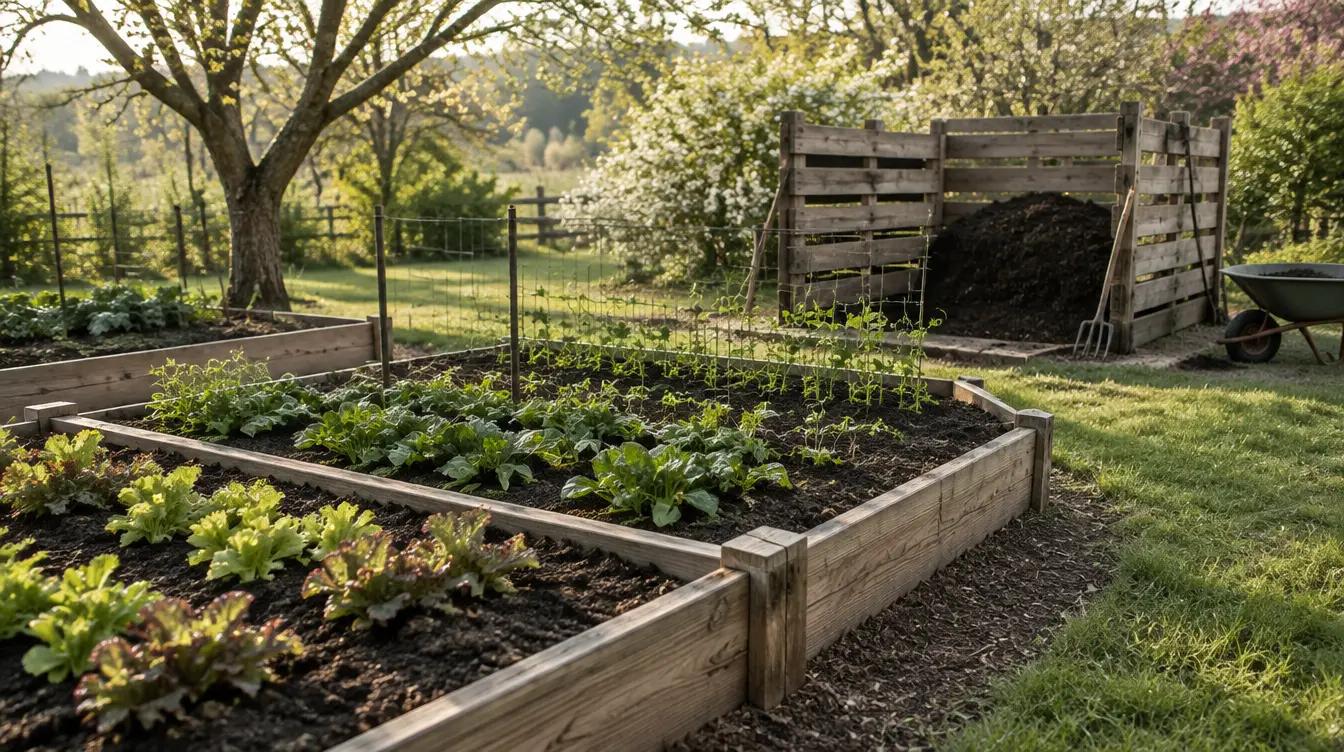
Winter composting is mostly setup. Build the pile big before deep cold, cap it, leave it alone during freezes, and decide now what happens to your scraps. A pile that freezes in January can still feed your beds by late spring.
What zone are you in, and does your pile freeze solid? Tell us in the comments below.
Related Guides:
- Summer Composting Tips: Turn Kitchen Scraps into Garden Gold
- Worm Composting For Organic Gardeners
- How To Make A Compost Bin
Calling all green thumbs, Garden Season needs YOU! Click here if you want to write for us!
Want to stay up to date? Follow Garden Season on Facebook, Twitter, Instagram, and Pinterest.